
Know Yourself. Know The Markets.
Behavioral Edge: “The ability to outperform others by managing one’s own emotional biases (like fear or greed) or by taking advantage of the irrational, emotional, or predictable errors made by competitors.“
Markets are not just numbers.
They are human.
Behavioral Edge exists for one reason:
To help serious investors, traders and decision-makers understand the psychological forces that move markets — and themselves.
We study markets through two lenses:
individual performance psychology and collective social behavior. We present this research through our free newsletter and articles.
Individual Performance
We not only study the many cognitive biases that plague individual traders, but also analyze PROVEN traders and investors, not just by looking at their strategies, but their decision-making patterns under pressure. How they manage drawdowns. How they size risk. How they act during euphoria and how they behave during panic. Durable performance leaves psychological fingerprints.
Collective Behavior
At the same time, markets are social systems driven by fear, greed, narrative contagion, sentiment, and herd dynamics. Bubbles form when belief becomes synchronized. Crashes unfold when emotional exhaustion reaches critical mass. Hive mentality, media amplification, and incentive structures distort perception long before price reflects reality.
Edge is rarely just informational.
It is behavioral.
Latest Articles
-

Hindsight Bias in Trading: Why “I Knew It All Along” Prevents Real Learning
Have you ever looked back at a market move and thought, “I knew that was going to happen”? That smug feeling of retroactive certainty is hindsight bias in trading at work. It’s a sneaky psychological trap that convinces traders they predicted outcomes they didn’t, leading to overconfidence, repeated mistakes, and stalled growth. In the hyper-fast…
-

Availability Heuristic in Trading: Why Dramatic News Drives Bad Choices
Availability Heuristic in Trading: Why Dramatic News Drives Bad Choices Have you ever stared at your trading screen, heart racing, and hit “sell” after a viral headline screamed “Death Spiral” or “Market Meltdown”? You’re not alone — and it’s not weakness. It’s the availability heuristic in trading hijacking your decisions. This cognitive bias, first identified…
-
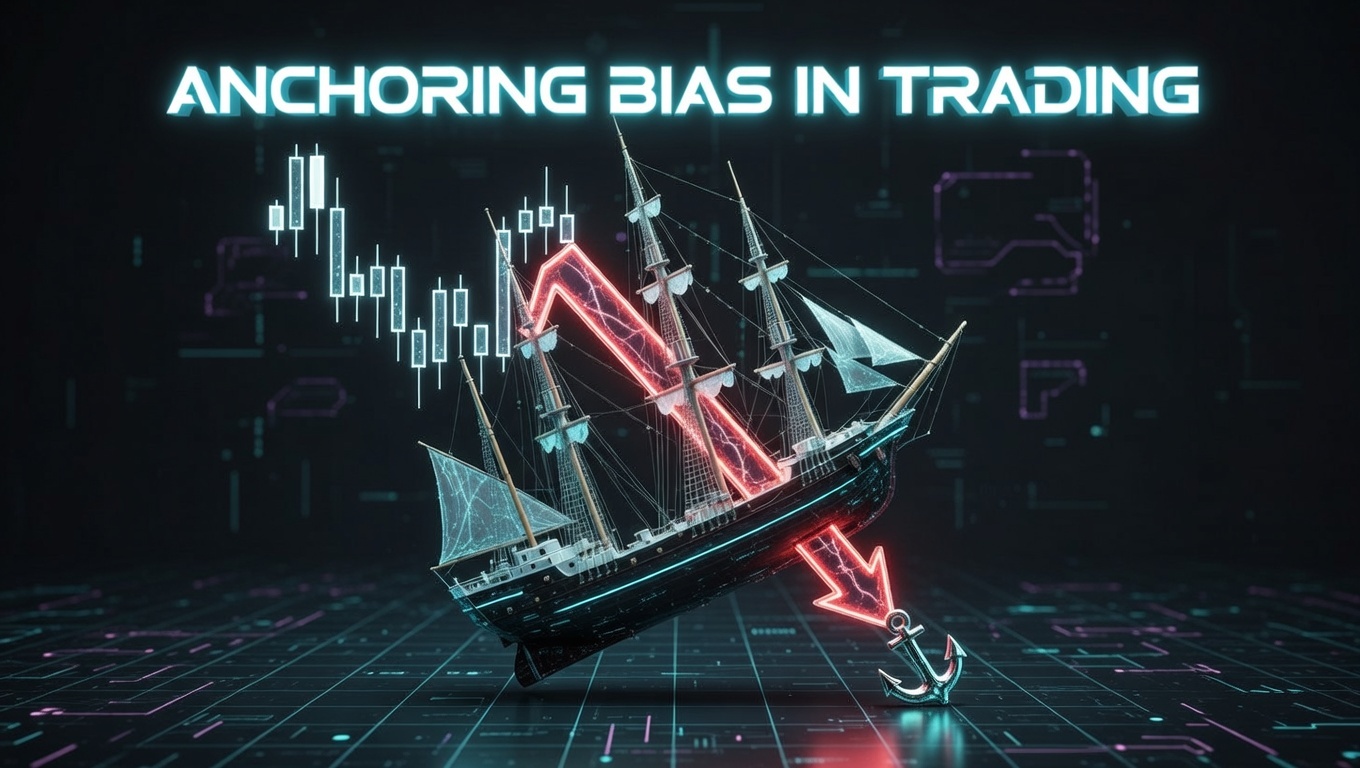
Anchoring Bias in Trading: Why the First Price You See Controls Your Decisions
The opening bell rings. A single number hits the tape — the first trade of the day for that stock, that IPO, that battered name. In seconds, your entire mental map recalibrates around it. Fair value? Support levels? Fundamentals? They all bend toward that one figure like iron filings to a magnet. This is anchoring…
-

Warren Buffett: Temperament Over Intelligence – Investing Psychology and Strategies 2026
Warren Buffett officially stepped down as CEO of Berkshire Hathaway at the end of 2025, but his investing philosophy has never been more relevant. At 95, the Oracle of Omaha leaves behind a $187 billion fortune built not on genius-level IQ or complex algorithms—but on something far rarer: rock-solid temperament. In today’s 2026 markets—where the…